


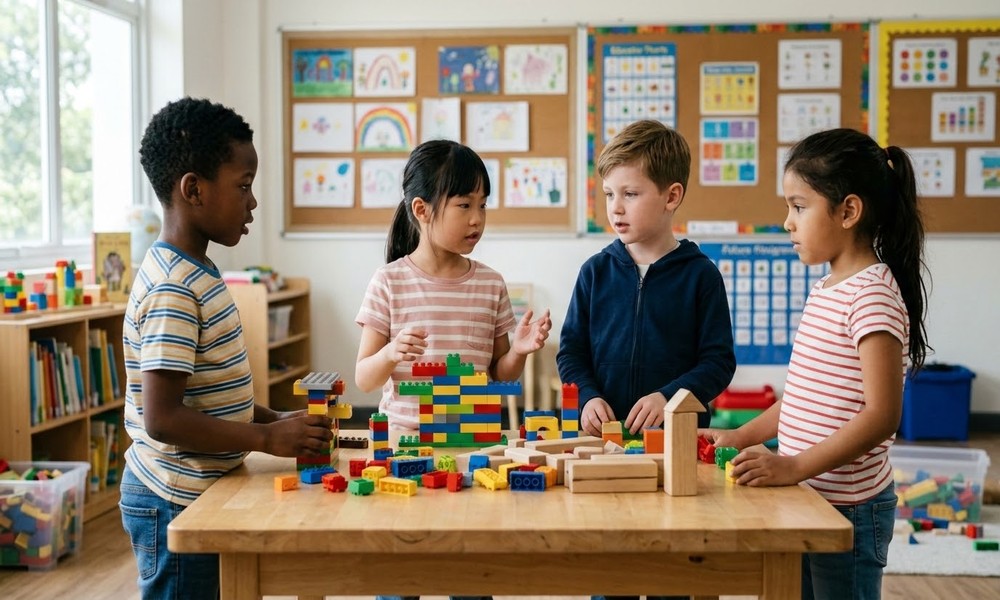
Communication is one of the main ways children explore the world, build relationships, and learn new skills. Long before they can explain their thoughts clearly, children use sounds, gestures, facial expressions, eye contact, movement, and early words to connect with others.
When communication is delayed or disrupted, the effects can reach beyond speech. It may influence learning, behavior, confidence, social participation, and emotional regulation.
Communication challenges in childhood can come from many different sources. Some children have trouble hearing spoken language clearly. Others hear well but struggle with social communication, language processing, attention, sensory regulation, or behavior. For many families, hearing health support and behavioral care work together to help children participate more fully at home, in school, and in the community.
Early Communication as a Foundation for Learning
Children begin developing communication skills in infancy. They listen to voices, respond to facial expressions, recognize familiar sounds, and slowly learn that communication helps them get comfort, attention, food, play, and support. These early exchanges create the foundation for later speech, vocabulary, social skills, and classroom learning.
When communication develops smoothly, children often become more confident asking questions, following directions, joining group activities, and expressing their needs. When development is delayed, children may feel frustrated because they cannot easily make themselves understood. That frustration can show up as withdrawal, tantrums, difficulty with transitions, or trouble participating in structured learning activities.
Communication also supports thinking. When children learn words for objects, actions, feelings, and ideas, they gain tools for organizing their experiences. A child who can say, “I’m scared,” “I need help,” or “I don’t understand” has more options than a child who can only cry, run away, or refuse a task. That is one reason early communication support can have such a wide impact on development.
Hearing Health and Language Development
Hearing plays an important role in how children learn spoken language. Even mild or changing hearing difficulty can affect how clearly a child hears speech sounds, especially in noisy places like classrooms, playgrounds, or busy homes. A child may hear that someone is talking but miss key sounds that separate one word from another.
For example, a child who does not consistently hear high-frequency speech sounds may have trouble learning certain consonants. This can affect pronunciation, listening comprehension, and early reading skills. Some children may also seem inattentive or uncooperative when they are actually missing parts of what is being said.
Pediatric hearing evaluations can help determine whether hearing is contributing to communication concerns. Providers such as Infinity Hearing, which offers pediatric hearing evaluations and hearing aids, can be part of the broader support system families use when there are concerns about listening, speech clarity, or language development. Identifying hearing needs early can help children access sound more consistently and reduce barriers to learning.
Behavioral Signs That May Be Linked to Communication Difficulties
Communication challenges do not always look like speech delays. Some children speak often but struggle to use language socially. Others may have a strong vocabulary but have trouble understanding instructions, answering questions, staying on topic, or interpreting tone of voice and facial expressions. These challenges can influence behavior in ways that are easy to misunderstand.
A child who avoids group activities may not be trying to refuse cooperation. They may feel overwhelmed by noise, confused by directions, or unsure how to join peers. A child who grabs toys instead of asking may not yet have the language or social problem-solving skills to negotiate. A child who melts down during transitions may be struggling to understand what is happening next.
That is why it helps to view behavior as communication. Instead of asking only, “How do we stop this behavior?” adults can also ask, “What is the child trying to tell us?” That shift often leads to more useful support because it addresses the underlying need, not just the visible action.
Autism, Social Communication, and Structured Support
Some children with communication challenges are also diagnosed with autism spectrum disorder. Autism can affect social interaction, flexibility, sensory processing, play skills, and communication. Some autistic children use spoken language fluently. Others use fewer words, gestures, visual supports, or augmentative and alternative communication tools.
Structured behavioral therapy can help children build practical communication skills in everyday settings. Applied behavior analysis, often called ABA, may focus on requesting help, following routines, responding to social cues, tolerating changes, and using safer or more effective ways to communicate needs. The goal is not only to increase words. It is to help the child communicate in ways that improve participation and reduce frustration.
School-based supports are especially important because many communication demands happen during the school day. Programs such as Sunshine Advantage, which provides school-based ABA therapy and autism support, reflect one model of helping children practice skills in the environments where they regularly learn and interact. When communication goals are connected to classroom routines, children often have more meaningful chances to use new skills.
The Connection Between Listening, Attention, and Classroom Performance
Listening in a classroom is more complex than simply hearing sound. Children must filter background noise, focus on the teacher’s voice, remember directions, understand vocabulary, and respond at the right time. For a child with hearing difficulty, language delays, attention challenges, or sensory sensitivities, that can be exhausting.
A child who misses information may fall behind academically even when intelligence is not the issue. They may struggle with phonics, reading comprehension, written expression, or multi-step instructions. Over time, repeated communication breakdowns can affect motivation. A child may stop trying because school feels confusing or discouraging.
Teachers and caregivers can support children with clear instructions, visual schedules, repetition, checks for understanding, and predictable routines. Seating arrangements, reduced background noise, assistive listening technology, and collaboration with specialists can also help. The best strategies depend on the child’s specific needs, which is why evaluation and observation matter.
Pediatric Care and Developmental Monitoring
Developmental concerns are often first noticed by parents, caregivers, teachers, or pediatric healthcare providers. A child may not respond to their name, may have limited words, may struggle with peer play, or may show behavior that seems unusual for their age. Early conversations about these concerns can help families decide whether further evaluation is needed.
Pediatric healthcare providers can help identify or rule out factors that may affect development, including hearing concerns, speech delays, sleep problems, chronic ear infections, developmental delays, or behavioral health needs. They can also guide families toward specialists such as audiologists, speech-language pathologists, occupational therapists, developmental pediatricians, or behavioral therapists.
Clinics such as Carolina Urgent Care, which provides developmental and pediatric healthcare services, may be part of a family’s care pathway when concerns arise. While urgent and pediatric care does not replace specialized developmental evaluation, it can serve as an important point of contact for discussing symptoms, asking questions, and identifying appropriate next steps.
Family Involvement in Communication Progress
Children often make the most progress when support extends beyond therapy sessions or medical appointments. Families play a major role because they are present during daily routines such as meals, dressing, play, homework, bedtime, and community outings. These ordinary moments offer repeated chances to practice communication.
Family support may include learning how to model language, respond to gestures, use visual supports, reduce communication pressure, and encourage turn-taking. Caregivers may also need guidance on how to respond when a child feels frustrated or overwhelmed. When adults understand the reason behind a child’s behavior, they can respond with more calm and consistency.
Support is not only about the child’s needs. Families may feel stress, confusion, guilt, or fatigue when communication challenges affect daily life. Services such as Alpenglow Homecare in Montana, which offers family support and caregiving guidance, can be relevant for families looking for help with care routines, planning, and practical support. Caregiver confidence often improves when families have clear strategies and reliable guidance.
Collaboration Across Care, School, and Home
Communication challenges usually call for a team approach. No single professional sees the whole picture. Parents understand the child’s daily habits and emotional patterns. Teachers see how the child functions in groups and learning environments. Healthcare providers evaluate developmental and medical factors. Therapists observe skill development and recommend targeted strategies.
Collaboration helps prevent gaps in care. For example, if a child has hearing difficulty, the school team may need to understand how it affects classroom listening. If a child uses visual supports in therapy, caregivers and teachers may need the same tools so the child experiences consistency. If a child communicates through behavior, everyone should understand the replacement skills being taught.
Regular communication among adults also helps track progress. A strategy that works at home may need adjustment at school. A child who speaks well in quiet settings may struggle in noisy ones. A child who follows directions one-on-one may need extra support in groups. Shared information makes support more realistic and more responsive to the child’s actual environment.
Conclusion
Communication challenges can influence many parts of childhood development, including learning, behavior, relationships, and emotional well-being. Hearing health, developmental monitoring, behavioral therapy, classroom support, and family guidance all play important roles in helping children communicate more effectively.
The most helpful approach is rarely based on a single solution. Children benefit when adults look carefully at what may be affecting communication and respond with patience, structure, and appropriate support. When hearing needs are identified, behavior is understood as communication, and families and professionals work together, children have more opportunities to learn, connect, and participate with confidence.