
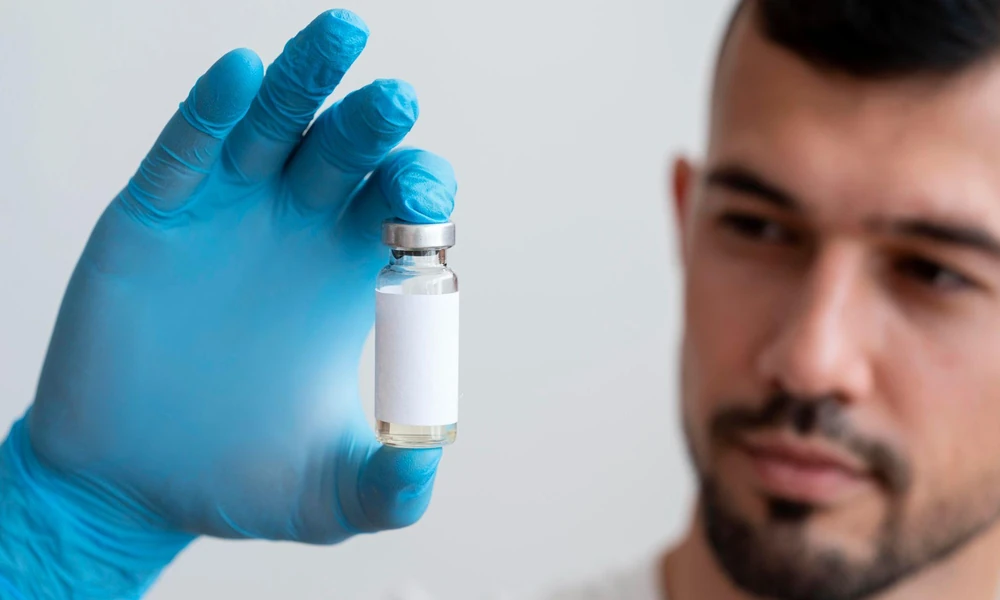
Collagen production slows over time, and past a certain point, a treatment built entirely around stimulating the skin to make more of its own can be asking a declining system to do more work than it’s currently capable of. Most skinboosters are built around exactly that assumption: trigger the skin’s own repair response and let it rebuild structural components on its own schedule. A different approach supplies some of those structural components directly, rather than relying on the skin to manufacture them from scratch.
A Few Things Worth Knowing Before a Consultation
- The approach differs from a typical skinbooster in what it actually supplies, not just in branding
- Suitability depends on existing skin conditions and sensitivities, assessed individually
- What changes, and over what timeframe, is discussed at consultation rather than promised in advance
Stimulating Collagen Assumes There’s Something Left to Stimulate
Illumia’s ECM booster is built around a different premise: instead of relying solely on the skin’s own fibroblasts to manufacture new collagen and elastin from a stimulus, it supplies several structural components, including collagen, elastin, fibronectin, laminin, and hyaluronic acid, directly into the treated area. For skin that’s still responding well to stimulation-based treatments, that distinction may matter less in practice. For skin where that capacity has declined, whether through age or other factors a doctor would assess individually, supplying the components rather than asking the skin to produce them is a meaningfully different mechanism, not simply a different term for the same process.
Seven Components, Not One Active Ingredient
The formulation includes several distinct structural elements rather than a single active ingredient, which is part of what separates it from a single-molecule injectable.
- Collagen and elastin, the main structural proteins in skin
- Fibronectin, laminin, and tenascin, which support cell attachment and tissue structure
- Growth factors and matrix metalloenzymes involved in tissue remodelling
- Glycosaminoglycans, including hyaluronic acid, for hydration and matrix support
This Sits Under Medical Aesthetics, Not a Spa Menu
Because the formulation is injected rather than applied topically, it’s administered by a doctor within medical aesthetics rather than offered as a facial add-on, and that distinction carries through to how a session is assessed beforehand. A doctor at Illumia Medical will typically review existing skin conditions, any known sensitivities, and what a person is hoping the treatment might address, before deciding whether it’s an appropriate option for that particular case. That assessment is part of what separates a procedure like this from an over-the-counter skincare product making similar-sounding claims about structural support.
Not Every Skin Type Is Assessed the Same Way
Existing conditions such as active breakouts, certain inflammatory skin conditions, or known sensitivities to any of the formulation’s components are all things a doctor would ask about before treatment, since they can change whether, or how, a session proceeds. This is also why a first visit typically includes a conversation about medical history rather than moving straight to the injection itself, and why an approach suitable for one person’s skin might be handled differently, or not recommended at all, for someone else’s. A doctor may also ask about other treatments carried out recently in the same area, since spacing between different procedures can factor into when a session is appropriately scheduled.
Does “Natural-Looking” Mean Nothing Visibly Changes?
Not quite; it refers to the formulation integrating with the skin’s existing structure rather than sitting apart from it as a distinct synthetic layer, not to a specific visible result either way. What changes, how much, and over what timeframe varies by individual and is something a doctor discusses case by case during consultation, rather than something promised upfront based on the product alone.
None of this makes supplementing structural components inherently better than stimulating the skin to produce its own, since the right approach depends on what a particular person’s skin is currently capable of doing on its own. It’s worth asking a doctor directly which mechanism actually applies to a specific case, rather than assuming either approach by default based on whichever one happened to come up first in a search.
A consultation is where suitability for an ECM booster, or any alternative, actually gets worked out. Contact Illumia Medical to arrange an assessment.